Monet's Rouen Cathedral Paintings: Where They Are and Where He Stood

Monet's Rouen Cathedral paintings do not hang together in Rouen, and most visitors expecting a room full of them are disappointed before I can explain why. The series is scattered across museums on three continents, sold canvas by canvas after Monet finished reworking them in his studio, and Rouen's own Musée des Beaux-Arts holds exactly one of them. I get asked where to see the paintings almost as often as where to see the cathedral itself, and the honest answer takes a minute to unpack properly, so here it is: what Monet actually did on this square in 1892 and 1893, where the thirty-odd canvases ended up, and where you can still stand in the exact spot he painted from.
Quick answer
Monet's Rouen Cathedral paintings do not hang together anywhere, including Rouen itself. The Musée d'Orsay in Paris holds five, the largest single group and the only place to see several side by side; Rouen's own Musée des Beaux-Arts holds just one, given to the city in 1909. The rest are scattered across museums in Washington, New York, Boston and beyond.
Key takeaways
- Rouen's Musée des Beaux-Arts holds one canvas, given to the city in 1909, not a room full of them
- Five of the series hang at the Musée d'Orsay in Paris, the largest single group anywhere
- The rest are split across museums including Washington, New York, Boston and Cardiff
- Monet painted from rented rooms on the Place de la Cathédrale in 1892 and 1893, reworking the canvases in his studio in 1894
- The facade faces west, so his afternoon and evening light is the light to look for on a visit, best paired with walking tours of the cathedral Monet painted
- Seeing the one Rouen canvas costs nothing, since the Musée des Beaux-Arts' permanent collection is free and about ten minutes' walk from the Gothic Cathedral and Joan of Arc walk
Walks That Stop Where Monet Painted
Each of these spends time on the Place de la Cathédrale itself, the square Monet worked from for two full seasons.
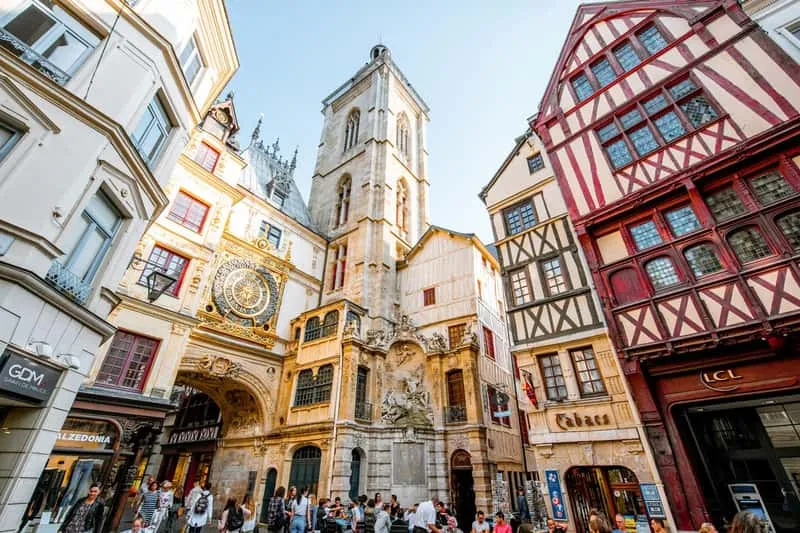 from $52Monet's Cathedral
 Gothic Cathedral & Joan of Arc Walking Tour
Explore Rouen's medieval heart: admire the Gothic Cathedral that inspired Monet, visit Joan of Arc's execution site, and wander through charming streets lined with half-timbered houses.
- The Gothic cathedral facade Monet painted over 30 times
- Joan of Arc's execution site at the Vieux-Marché
- Half-timbered medieval streets
- A compact 90-minute route through the old town
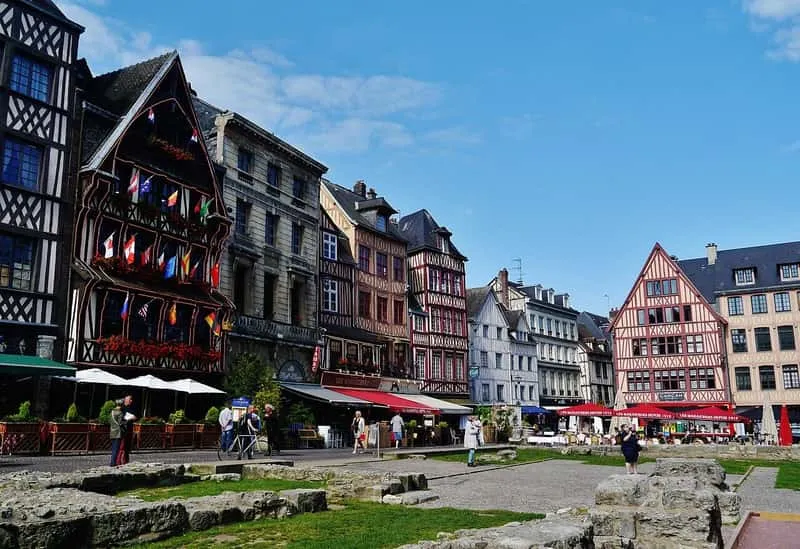 from $32Most Popular
 Historic Old Town & Gothic Cathedral Guided Tour
Discover the fascinating history of Rouen, from the Roman forum to the tallest Gothic cathedral in France, and follow the fate of Joan of Arc, from her prison…
- France's tallest Gothic cathedral, the one Monet painted
- Rouen's Roman forum and medieval origins
- One of Europe's oldest Jewish quarters
- The old Parliament of Normandy
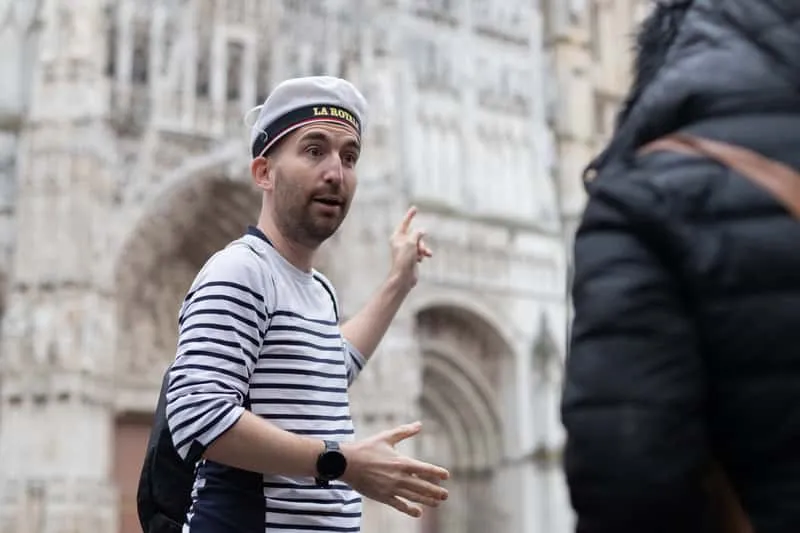 from $116Small Group
 Secret History of Rouen Small-Group Tour
You will discover 10 must-see places in Rouen and some hidden and unusual places as well.
- Ten must-see landmarks plus hidden corners
- Small group, not a coach crowd
- Story-led secret history of the city
- Two hours through the medieval centre
What Monet Actually Did in 1892 and 1893
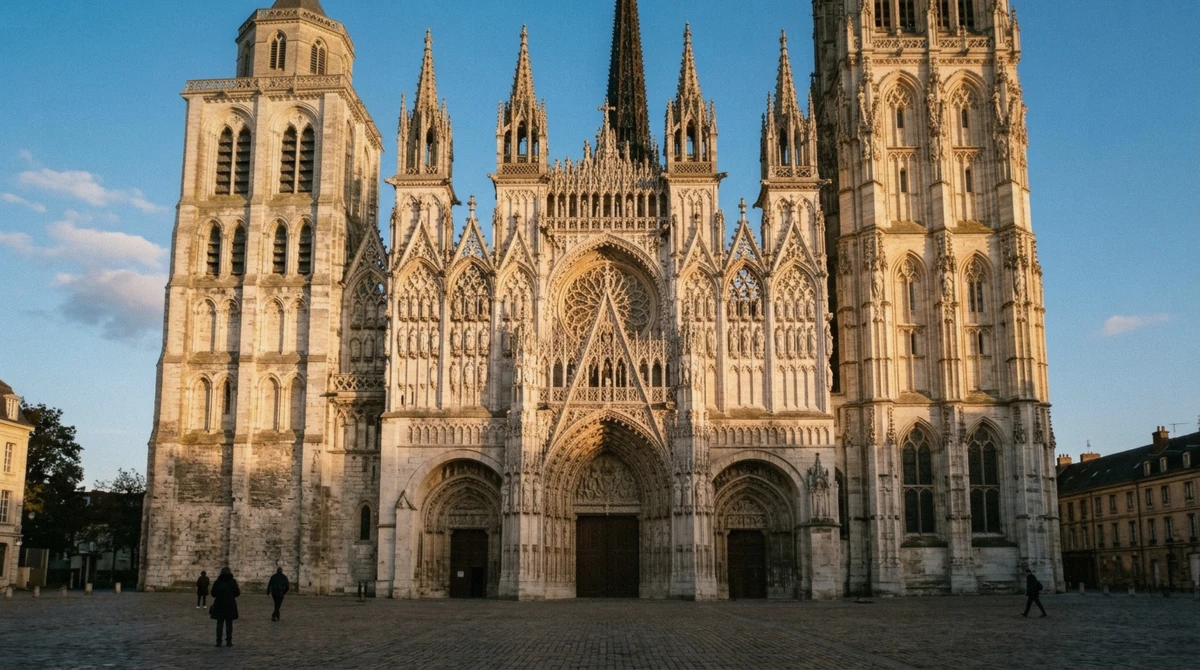
Monet painted the cathedral's west front more than thirty times, working across two spring seasons, 1892 and 1893, from a set of rented rooms on and around the Place de la Cathédrale rather than from a single fixed spot. He worked on multiple canvases in the same sitting, moving between them as the light shifted through the day, chasing a specific hour's colour on one canvas while another waited for tomorrow's matching light to return. That working method, several canvases in progress at once, each one tied to a narrow window of light rather than a single finished sitting, is exactly why the series reads as a study of light itself rather than a study of a building.
He did not finish the paintings on site. Monet reworked the canvases in his studio through 1894, which is why many of the finished works are signed and dated that year even though the observation happened two years earlier. Exactly how many canvases came out of the project is disputed in different sources: Wikipedia and the National Gallery of Art in Washington say more than thirty, while the Rouen Tourist Office counts twenty-eight.
There is no single agreed total, so the honest figure to use is more than thirty, or around thirty, never a precise count presented as fact.
The cathedral gave Monet a far more complex surface to chase light across than his earlier series work, carved stone catching and losing detail across hundreds of individual forms rather than the simpler rounded shapes of a haystack or a line of poplar trees. That complexity is exactly why the series still reads as such a startling demonstration of the same idea across dozens of canvases: the building itself never changes, yet almost none of the finished paintings look like they show the same facade, because what he was actually recording each time was the hour and the weather, with the stone simply the surface it happened to fall on.
Where the Paintings Hang Today
The series was sold off individually rather than kept as a set, and the canvases have never hung together in one building since, including in Rouen. That single fact surprises more visitors than anything else on this page: the city the cathedral stands in owns one painting of it, not the collection people imagine when they hear the series' name.
| Museum | City | Roughly how many |
|---|---|---|
| Musée d'Orsay | Paris | Five, the largest single group |
| Musée des Beaux-Arts | Rouen | One |
| National Gallery of Art | Washington, D.C. | One or more |
| Metropolitan Museum of Art | New York | One |
| Museum of Fine Arts | Boston | One or more |
| J. Paul Getty Museum | Los Angeles | One |
| Musée Marmottan Monet | Paris | One or more |
| Clark Art Institute | Williamstown, Massachusetts | One |
| National Museum Cardiff | Cardiff, Wales | One |
| Fondation Beyeler | Basel | One |
| Folkwang Museum | Essen | One |
| Pola Museum of Art | Hakone | One |
| National Museum of Serbia | Belgrade | One |
| Klassik Stiftung Weimar | Weimar | One |
Beyond Orsay's five, most of these museums hold a single canvas each, which is the real shape of the story: more than thirty paintings scattered across three continents, one museum in Paris the only place you can compare several side by side, and Rouen itself holding just the one. Sixteen of the series did come back to Rouen once, in a 1994 loan exhibition at the Musée des Beaux-Arts, a temporary show rather than a permanent holding. If an older guidebook or blog post describes Rouen as having a large Monet cathedral collection, that 1994 show is very likely the source of the confusion; it closed decades ago, and it was never a standing feature of the museum.
The One Canvas You Can See in Rouen
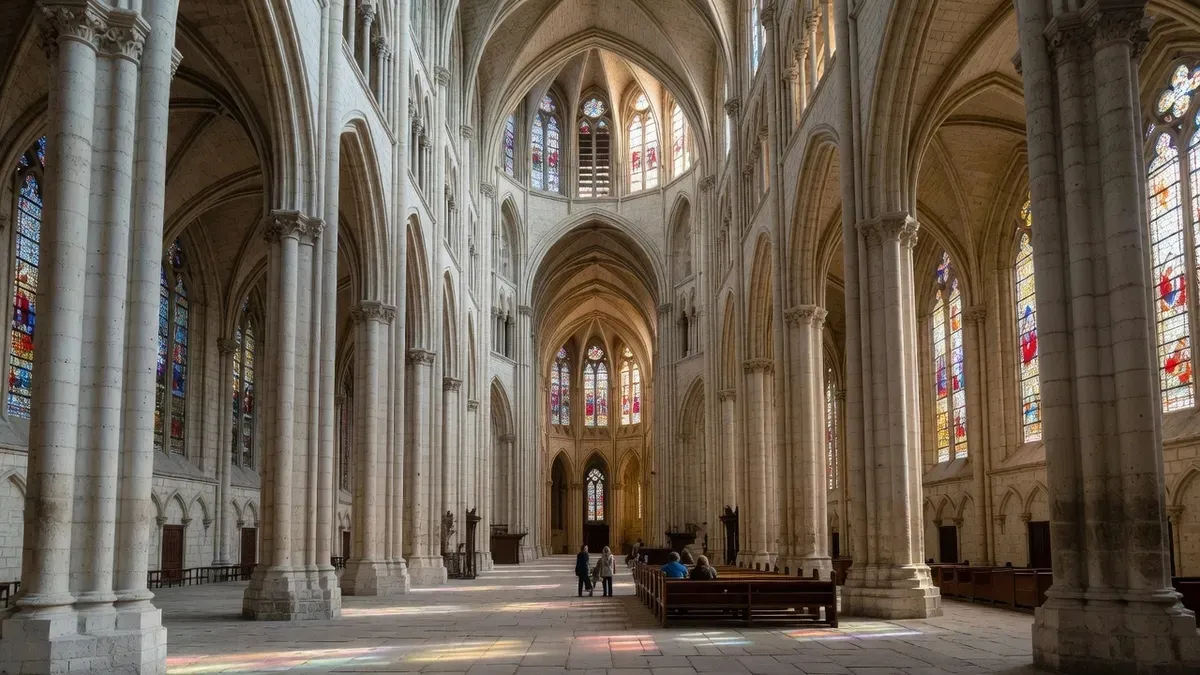
The Musée des Beaux-Arts de Rouen holds a single cathedral canvas, La Cathédrale de Rouen. Le Portail et la tour d'Albane. Temps gris (1894), showing the portal and the Albane tower under a grey sky.
A local patron gave it to the city in 1909, and it has been part of the museum's permanent collection ever since, on view for free alongside the museum's wider Impressionist holdings: Monet's own Vue générale de Rouen, plus works by Sisley, Pissarro and Degas, in a collection widely regarded as one of France's strongest outside Paris.
That one grey-sky canvas is worth the ten-minute walk from the cathedral on its own merits, but it is genuinely one painting, not a wing. Anyone planning a trip around seeing multiple canvases together needs to go to the Musée d'Orsay in Paris instead, where five sit in the same rooms; Rouen's contribution to the story is the view itself, the square and the light, not a large collection of the finished work.
Standing Where He Stood
Monet worked from upper-floor rented rooms on the north side of the Place de la Cathédrale and along Rue du Grand-Pont, looking across the square at the facade rather than painting from ground level among the crowds. The view behind Le Portail et la tour d'Albane, the one canvas Rouen keeps, was painted from a draper's premises at 81 Rue du Grand-Pont, a specific address rather than a vague description of the square.
None of those upper-floor rooms are open to visitors today, they were private commercial premises then and remain private buildings now, but the square itself has not moved, and standing anywhere on the Place de la Cathédrale facing the west front puts you in roughly the same relationship to the building Monet worked from, just at street level rather than a floor or two up. It is enough to understand the angle and the light even without access to his actual window.
The square itself has changed less than most old-town squares this close to a major cathedral tend to, still lined with the mix of shopfronts and upper-floor apartments that gave Monet somewhere to rent in the first place. Walking a slow loop of the Place de la Cathédrale rather than approaching it from one angle only is worth the extra few minutes, since the facade genuinely reads differently from the north side near Rue du Grand-Pont than it does standing directly in front of the main portal, and comparing those two views is the closest a visitor gets today to seeing what Monet himself was choosing between canvas to canvas.
Seeing the Facade in Monet's Light
Rouen Cathedral's west front faces west, which is the whole reason Monet's light lands the way it does in the paintings. A west-facing facade catches direct sun in the afternoon and evening rather than the morning, so the golden, low-angle light people recognize from the series is genuinely there to see, on a clear day, from roughly mid-afternoon onward. Morning visitors see the same stone in flatter, cooler light; it is not a lesser view, just a different one from the one the series is known for.
Weather does the rest of the work Monet was chasing. He painted the facade in fog, in flat grey overcast, and in bright sun, deliberately building a set that showed the same stone reading completely differently depending on the day, which is also why a grey afternoon in Rouen is not a wasted one for anyone hoping to see the building the way he saw it: the Rouen museum's own canvas is a grey-sky painting, not a sunny one.
Museum Practicalities
The Musée des Beaux-Arts de Rouen has free entry to its permanent collections, which includes the one cathedral canvas, and it sits about ten minutes' walk north of the cathedral. It opens daily 10:00 to 18:00, closed Tuesdays and also closed on 1 January, 1 May, 1 and 11 November, and 25 December. Temporary exhibitions are ticketed separately at their own prices, which the museum does not publish as a single standing figure, so check current pricing if a special exhibition is on during your visit.
Last verified: August 2026, against mbarouen.fr. The museum offers free self-guided audio tours through the Wivisites app, accessed by a QR code at the entrance, including a route built around the Impressionist rooms specifically, which is the natural way to find the cathedral canvas alongside the museum's wider Monet and Impressionist holdings without needing a printed map.
Give the visit at least half an hour beyond the cathedral canvas itself, since the surrounding rooms hold Caravaggio, Rubens and Géricault alongside the Impressionist works, and rushing straight to one painting and leaving undersells a collection that genuinely competes with museums well outside Rouen's size. Combine it with an afternoon at the cathedral square itself and the two visits sit comfortably either side of lunch.
| Stop | Cost | Open | Why go |
|---|---|---|---|
| Musée des Beaux-Arts de Rouen | Free (permanent collection) | Daily 10:00 to 18:00, closed Tuesdays | The one cathedral canvas in the city, plus Sisley, Pissarro and Géricault |
| Place de la Cathédrale | Free | Always | The windows Monet rented face the west front from here |
| Rouen Cathedral | Free | From 14:00 on Mondays, 09:00 to 19:00 Tuesday to Saturday | The subject itself; hours in our cathedral guide |
| Musée d'Orsay, Paris | Ticketed | Closed Mondays | Five of the series, the largest group anywhere, about 1 hour 15 minutes away by train |
Last verified: August 2026. If you are combining the two cities, our Rouen day trip from Paris guide covers the trains, and the self-guided walking route picks up once you are here.
The gap between the myth and the reality here is really the whole point. Monet did not leave Rouen a gallery of his own work, he left a building that still faces the same direction it did in 1893, still catches the same afternoon light, and still rewards standing in that square long enough to watch the stone change colour. The paintings themselves are mostly somewhere else.
The light they were painted in is still right here.
Frequently Asked Questions
How many paintings of Rouen Cathedral did Monet make?
More than thirty, painted in 1892 and 1893 and reworked in his studio through 1894. Sources differ on the exact count, some giving twenty-eight, others more than thirty, so no single precise number is agreed.
Where are Monet's Rouen Cathedral paintings now?
Scattered across museums worldwide. The Musée d'Orsay in Paris holds five, the largest single group; the rest are spread across museums including Washington, New York, Boston, Cardiff and several others, one or two canvases at a time.
Can you see a Monet cathedral painting in Rouen?
Yes, one. The Musée des Beaux-Arts de Rouen holds La Cathédrale de Rouen. Le Portail et la tour d'Albane. Temps gris (1894), given to the city in 1909, on permanent free display.
Where did Monet paint Rouen Cathedral from?
From rented rooms on the north side of the Place de la Cathédrale and along Rue du Grand-Pont. The Musée des Beaux-Arts canvas was painted from a draper's premises at 81 Rue du Grand-Pont.
Why did Monet paint the same cathedral so many times?
He was studying how light changed the same stone facade through the day and across different weather, working several canvases in the same sitting to catch each narrow window of light rather than finishing one view before moving to the next.
What time of day did Monet paint the cathedral?
The facade faces west, so his best light was afternoon and evening, when direct sun hits the stone. He also painted it in fog and flat grey conditions, so the series covers far more than one time of day.
How much does the Musée des Beaux-Arts de Rouen cost?
The permanent collection, including the cathedral canvas, is free. It opens daily 10:00 to 18:00, closed Tuesdays. Temporary exhibitions are ticketed separately at their own price.